Manaslu Conservation Area: Everything You Need to Know Before Trekking
Published on Dec. 15, 2025, 12:09 p.m.
The Manaslu Conservation Area (MCA) is one of Nepal’s most pristine and culturally rich protected regions. Declared a conservation area in 1998, it is the second conservation area in Nepal, established to protect fragile Himalayan ecosystems and preserve the unique Tibetan Buddhist culture of the region. Located in the northern part of Gorkha District, the Manaslu Conservation Area offers an extraordinary blend of towering mountains, diverse flora and fauna, ancient monasteries, and remote trekking routes.
Covering an area of approximately 1,663 square kilometers,covering seven Tsumnubri Rural Municipality wards i.e sirdibas, chumchet. Chekambar. Bihi, pork, Lho and samagaun(Roe) MCA lie adjacent to the Tibet Autonomous Region of China, which gives it a semi-restricted status. This remoteness has helped the region maintain its traditional lifestyle, unspoiled landscapes, and rich biodiversity, making it one of the most rewarding trekking destinations in Nepal.
Overview of Manaslu Conservation Area
The Manaslu Conservation Area covers seven wards of Tsumnubri Rural Municipality, including:
The village of Jagat (Sirdibas) serves as the main entrance point to the Manaslu Conservation Area. All trekkers must register and show permits here before entering the protected zone.
There are approximately 9,000 inhabitants living within the conservation area, most of whom belong to Tibetan-origin communities that have practiced Buddhism for centuries.
Geographical and Ethnic Divisions of Manaslu Region
The Manaslu Conservation Area is broadly categorized into three distinct geographical and cultural regions, each with its own landscape, climate, and ethnic identity.
1. Nubri Valley
The northern part, including Samagaun, Lho, and Prok, is known as Nubri Valley.
This region is heavily influenced by Tibetan culture, with stone houses, prayer flags, mani walls, and ancient monasteries dominating the landscape.
2. Kutang (Kuthang) Region
The middle region, including Bihi, is called Kutang.
It forms a transitional zone between the lower hills and the high Himalayan alpine region, both geographically and culturally.
3. Tsum Valley
The southern section, including Chumchet and Chekampar, is known as Tsum Valley.
Tsum Valley is famous for its sacred Buddhist heritage, meditation caves, and peaceful spiritual environment.
Biodiversity of Manaslu Conservation Area
Manaslu Conservation Area is one of the most biologically diverse regions in Nepal. Due to its wide altitude range (from around 700m to over 8,000m), it supports multiple ecosystems and forest types.
Flora of Manaslu Conservation Area
There are over 2,000 species of flowering plants recorded in MCA, spread across 11 different forest types.
1. Subtropical Forest (700m – 2,000m)
Found in the lower regions, this zone includes species such as:
Sal (Shorea robusta)
Schima
Bamboo
Wild banana plants
2. Temperate Forest (2,000m – 3,000m)
This zone is known for vibrant autumn colors and includes:
Oak
Maple
Blue pine
Rhododendron
3. Sub-Alpine and Alpine Forest (3,000m – 4,500m)
Vegetation becomes shorter and hardier:
Juniper (Dhupi)
Dwarf rhododendron
Fir
Alpine grasses
4. Nival Zone (Above 4,500m)
Vegetation is sparse, but medicinal plants thrive:
Mosses and lichens
Jatamansi
Kutki
Yarsagumba (Cordyceps sinensis)
Fauna of Manaslu Conservation Area
Mammals
There are 33–39 species of mammals recorded in MCA, including several endangered species.
Large Carnivores (Predators)
Snow Leopard (Endangered): Found above 3,500m in rocky alpine terrain; preys mainly on blue sheep and Himalayan tahr.
Himalayan Grey Wolf
Himalayan Black Bear (omnivore, found in mid-hill forests)
Lynx (mountain cat)
Endangered and Rare Mammals
Red Panda (Endangered): Found in temperate forests with dense bamboo.
Yellow-throated Marten
Leopard Cat
Jungle Cat
Herbivores
Blue Sheep (Bharal) – key prey of snow leopards
Himalayan Tahr
Musk Deer
Himalayan Goral
Birds
More than 110–201 species of birds are found in the Manaslu region, including:
Golden Eagle
Himalayan Griffon Vulture
Bearded Vulture (Lammergeier)
Himalayan Monal
Kalij Pheasant
Snow Partridge
Reptiles and Butterflies
3 species of reptiles, including Himalayan Agama and non-venomous mountain snakes
11 species of butterflies
Tourism and Infrastructure Development
For many years, the Manaslu region remained neglected in terms of infrastructure and basic services due to its semi-restricted status and proximity to the Tibetan border. Unlike the Annapurna and Everest regions, Manaslu did not attract mass tourism.
However, tourism has been steadily increasing, with more than 7,000 trekkers visiting Manaslu Conservation Area in 2018, and the numbers continue to grow.
MCA Offices and Checkpoints
Main Office: Philim and Sirdibas
Liaison Office: Gorkha Bazaar
Tourist Checkposts & Information Centers: Jagat and Samagaun
Manaslu Circuit Trek Overview
The Manaslu Circuit Trek is a classic Himalayan trek that circles Mount Manaslu (8,163m), the 8th highest mountain in the world. The trek usually takes 12 to 18 days, depending on side trips and acclimatization.
Key Highlights
Crossing Larke La Pass (5,160m), one of Nepal’s most dramatic high passes
Spectacular views of:
Manaslu Range
Annapurna Range
Himalchuli
Ngadi Chuli
Himlung Himal
Choe Himal
Dense forests, deep gorges, glaciers, and high alpine landscapes
Rich Tibetan Buddhist culture and ancient monasteries
Difficulty Level
The Manaslu Circuit Trek is moderately to highly challenging, making it less suitable for beginner trekkers without prior high-altitude experience.
Tsum Valley Trek
The Tsum Valley Trek is a spiritual journey into one of Nepal’s most sacred Himalayan valleys.
Location and Geography
Tsum Valley lies in the northeastern part of Gorkha District, surrounded by:
Boudha Himal and Himalchuli (West)
Ganesh Himal (South)
Siring Himal (7,187m) (North)
Cultural Significance
The valley is deeply rooted in Tibetan Buddhism and is adorned with:
Mani walls
Chortens
Prayer flags
Sacred monasteries
It is believed that Guru Rinpoche and Milarepa meditated in nearby caves. Tsum Valley is ideal for trekkers seeking inner peace, meditation, and spiritual discovery.
Trekking Route Description
The Manaslu trek typically begins from Soti Khola, near Arughat. The trail follows the Budhi Gandaki River, passing through bamboo forests and narrow gorges.
After exploring Tsum Valley, trekkers rejoin the Manaslu Circuit at Deng village. From Lho, the trail enters the Nubri region, characterized by Tibetan settlements, monasteries, and dramatic mountain scenery.
Restricted Area Rules and Trekking Permits
Manaslu is a restricted trekking area, designed to protect its ecosystem and cultural heritage.
Important Rules
Solo trekking is not allowed
Minimum two trekkers required
A licensed trekking guide is mandatory
Permits must be obtained through a registered trekking agency
Required Permits
1. Restricted Area Permit (RAP)
Peak Season (Sep–Nov):
Foreigners: USD 100 (first 10 days), USD 15 per extra day
SAARC: USD 70 + USD 10 per extra day
Nepalese: Not required
Off-Season (Dec–Aug):
Foreigners: USD 75 + USD 10 per extra day
SAARC: USD 50 + USD 7 per extra day
2. Manaslu Conservation Area Permit (MCAP)
Foreigners: NPR 3,000
SAARC: NPR 1,000
Nepalese: NPR 100
3. Annapurna Conservation Area Permit (ACAP)
Same cost as MCAP
4. Tsum Valley Permit
Sep–Nov: USD 40 + USD 7 extra day
Dec–Aug: USD 30 + USD 7 extra day
5. Chumnubri Rural Municipality Permit
Sep–Nov: USD 100 + USD 15 extra day
Dec–Aug: USD 75 + USD 10 extra day
Pungyen Gumba and Major Side Trips Around Samagaun (Roe) – Manaslu Trek Guide
Samagaun (Roe) is one of the most important villages on the Manaslu Circuit Trek and serves as a key acclimatization stop for trekkers. Surrounded by towering Himalayan peaks and Tibetan Buddhist culture, Samagaun offers several rewarding side trips, among which Pungyen Gumba is considered the best one-day acclimatization hike in the Manaslu region.
This area allows trekkers to adjust to altitude while exploring ancient monasteries, glaciers, sacred landscapes, and historic trade routes near the Tibet border.
Pungyen Gumba is located on the backside of Mount Manaslu, offering dramatic views of glaciers, icefalls, and close-up Himalayan scenery. Due to its altitude and gentle ascent, it is widely regarded as the ideal acclimatization hike during the Manaslu Circuit Trek.
Cultural and Religious Significance
In the local Tibetan language, Mount Manaslu is called “Gangri Pungyen”, meaning the mountain of Pungyen. Lord Pungyen is believed to be the protector deity of Mount Manaslu, and local people consider the surrounding mountains as sacred. The monastery was established centuries ago by Buddhist monks who chose this secluded location for religious teachings, meditation, and spiritual practice.
The Nubri Valley communities, who settled in this region around 400 years ago, still strongly follow these beliefs and traditions.
Altitude, Distance, and Hiking Time
Altitude: ~4,000 meters above sea level
Distance: Approximately 8–10 km (round trip)
Hiking Time: 3.5 to 4 hours from Samagaun
This altitude gain makes Pungyen Gumba perfect for acclimatization before crossing higher passes like Larke La.
Views and Scenery from Pungyen Gumba
Pungyen Gumba offers 360-degree panoramic views of the high Himalayas. From the monastery and surrounding hills, trekkers can clearly see:
Mount Manaslu (very close)
Himalchuli (7,900m)
Ngadi Chuli (Peak 29) – 7,600m
Buddha Himal
Massive glaciers and icefalls flowing down from Manaslu
The peaceful environment, prayer flags, and dramatic mountain backdrop make this one of the most scenic and spiritual spots in the Manaslu region.
Activities Around Pungyen Gumba
Camping
Camping near Pungyen Gumba is possible and offers a unique experience under the shadow of Mount Manaslu. It is ideal for photographers, nature lovers, and trekkers seeking solitude.
Gangsa Hike (Hidden Viewpoint)
Above Pungyen Gumba, at around 4,400 meters, lies a lesser-known hiking destination called Gangsa in the local language. This route is rarely visited by tourists.
Duration: Around 5 hours (up and down from Pungyen Gumba)
Highlight: Extremely close views of Mount Manaslu and surrounding glaciers
This hike is suitable for well-acclimatized trekkers looking for an off-the-beaten-path experience.
Serang Gumba – Ancient Monastery of Nubri Valley
Serang Gumba is an ancient Tibetan Buddhist monastery located at an altitude of around 3,100 meters in the Nubri Valley. The trek to Serang Gumba starts from Bihi Phedi and involves scenic but moderately challenging hikes through forests and alpine valleys.
Highlights of Serang Gumba
Deep spiritual atmosphere
Opportunity for meditation
Insight into traditional monastic life
Stunning views of Manaslu and Himalchuli
Chance to witness Buddhist festivals and rituals
This trek is ideal for travelers interested in culture, religion, and traditional Himalayan lifestyles.
Birendra Lake – Short and Scenic Acclimatization Hike
Birendra Lake is named after the late King Birendra Shah of Nepal. Located near the glacier of Mount Manaslu, it is surrounded by forested hills and dramatic mountain scenery.
Key Details
Altitude: ~3,640 meters
Distance: About 30 minutes from Samagaun
Difficulty: Easy
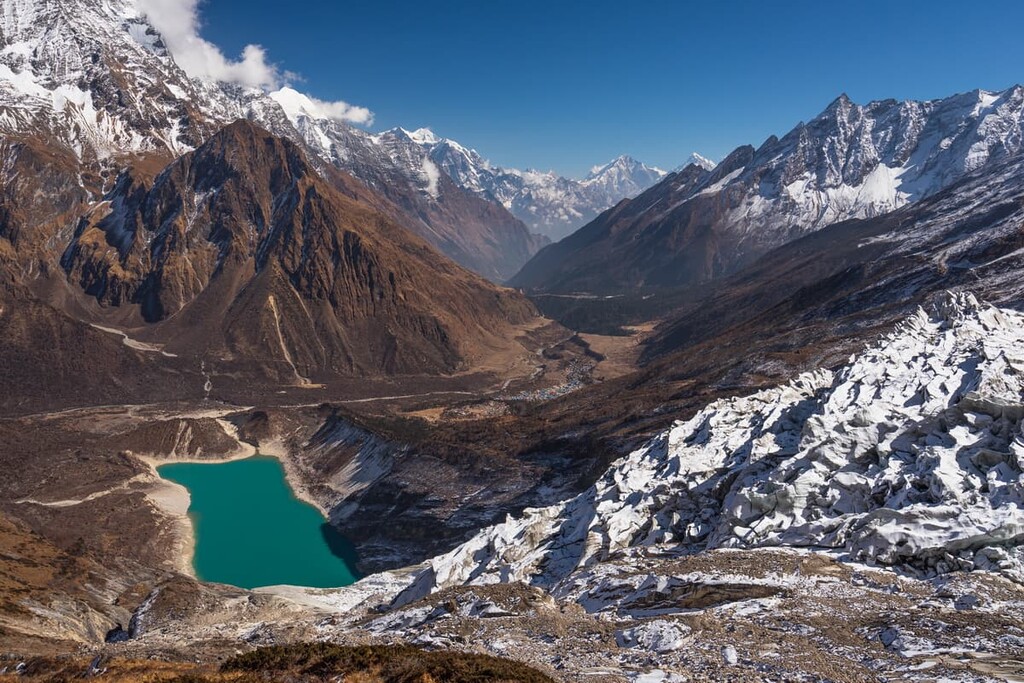
Birendra Lake is perfect for a short acclimatization walk, photography, and relaxation. Trekkers can observe glaciers melting from Mount Manaslu and water flowing through the rocky terrain, making it one of the most peaceful spots near Samagaun.
Manaslu Base Camp – Challenging but Rewarding Side Trip
The Manaslu Base Camp trek is one of the most challenging side trips in the region but offers unmatched mountain views.
Trek Details
Altitude: ~4,800 meters
Elevation Gain: ~1,300 meters from Samagaun
Duration: 5–6 hours (round trip)
The trail passes through rhododendron forests, moraines, and crystal-clear glacial terrain. From the base camp, trekkers get an incredibly close view of Mount Manaslu’s massive glaciers and ice walls.
This hike is recommended only for well-acclimatized trekkers.
Gyala Bhanjyang – Historic Nepal–Tibet Trade Route
Gyala Bhanjyang is a high mountain pass north of Samdo village and was historically used as a trade route between Nepal and Tibet. Compared to Ruila Bhanjyang (Rui Pass), Gyala is longer, higher, and less frequently visited.
Historical Importance
In the early 1900s, local people from the Nubri Valley used Gyala Bhanjyang to trade:
Wood
Yak products
Barley
In exchange, they brought:
Salt
Clothes
Utensils
Goods were transported using yaks, zopo (yak-cow hybrids), and horses.
Landscape and Highlights
Views of Gyala Peak
Panbari Himal (~6,700m)
Large open pasturelands used for grazing
A sense of untouched wilderness
Local herders often spent a full day here due to abundant grass and open grazing areas during their journeys toward Tibet
Best Time to Trek the Manaslu Circuit
Choosing the best time to trek the Manaslu Circuit is crucial for ensuring safety, comfort, and an enjoyable trekking experience. Weather conditions and trail accessibility play a major role in determining the overall success of the trek, as they directly affect visibility, temperature, and walking conditions.
Among the four seasons, Spring (March to May) and Autumn (September to November) are considered the most ideal and safest times to trek in the Manaslu region.
Spring Season (March to May)
Spring is one of the best seasons for the Manaslu trek. During this time, the trails are lined with blooming rhododendron forests, wildflowers, and lush greenery. Temperatures are moderate, mornings are usually clear, and mountain views are spectacular. This season is perfect for nature lovers and photographers.
Autumn Season (September to November)
Autumn offers stable weather, excellent visibility, and crystal-clear views of snow-capped Himalayan peaks. After the monsoon clears the atmosphere, the skies remain bright and the trails dry, making trekking conditions ideal. This is also the most popular season for the Manaslu Circuit Trek.
Seasons to Avoid
Summer/Monsoon (June to August): Heavy rainfall, slippery trails, leeches, and a higher risk of landslides make trekking challenging and unsafe.
Winter (December to February): Extremely cold temperatures, heavy snowfall, and snow-blocked high passes like Larke La can make the trek difficult or impossible.
Conclusion
Selecting the right season for your Manaslu Circuit Trek ensures safer trails, breathtaking scenery, comfortable temperatures, and an overall rewarding trekking experience. For the best balance of weather, safety, and views, Spring and Autumn remain the top choices for trekking in the Manaslu region.
Related Posts
Mountains and Peaks Along the Manaslu Circuit Trek
Published on Jan. 17, 2026, 10:12 a.m.
Manaslu Conservation Area is a hidden Himalayan gem in northern Gorkha, Nepal, known for its stunn…
Read more16-Day Manaslu Circuit Winter Trek: Snowy Trails, Larkya La Pass & Remote Villages
Published on Jan. 17, 2026, 7:09 a.m.
Manaslu Conservation Area is a hidden Himalayan gem in northern Gorkha, Nepal, known for its stunn…
Read moreBuilding Climate Resilience in the Manaslu Region: Reforestation, Women’s Leadership, and Sustainable Livelihoods
Published on Jan. 13, 2026, 10:23 a.m.
Manaslu Conservation Area is a hidden Himalayan gem in northern Gorkha, Nepal, known for its stunn…
Read moreManaslu Conservation Area: Everything You Need to Know Before Trekking
Published on Dec. 15, 2025, 12:09 p.m.
Manaslu Conservation Area is a hidden Himalayan gem in northern Gorkha, Nepal, known for its stunn…
Read moreExploring Nubri Valley Festivals: Culture, Rituals, and Himalayan Life
Published on Dec. 14, 2025, 4:29 a.m.
Manaslu Conservation Area is a hidden Himalayan gem in northern Gorkha, Nepal, known for its stunn…
Read more5-Day Annapurna Poon Hill Trek: Sunrise Views, Rhododendron Forests & Ghandruk Village Experience
Published on Dec. 11, 2025, 6:44 a.m.
Manaslu Conservation Area is a hidden Himalayan gem in northern Gorkha, Nepal, known for its stunn…
Read moreYarsagumba: The Himalayan Gold – Harvesting, Value, and Traditions Explained
Published on Dec. 10, 2025, 9:32 a.m.
Manaslu Conservation Area is a hidden Himalayan gem in northern Gorkha, Nepal, known for its stunn…
Read moreTraditional Himalayan Food Culture of Tsum and Nubri: A Deep Dive into Mountain Cuisine
Published on Nov. 23, 2025, 12:21 p.m.
Manaslu Conservation Area is a hidden Himalayan gem in northern Gorkha, Nepal, known for its stunn…
Read moreSama Mani Cultural Festival: Ancient Tibetan Opera, Dance & Ghee Offering Tradition in Samagaun
Published on Nov. 21, 2025, 8:28 a.m.
Manaslu Conservation Area is a hidden Himalayan gem in northern Gorkha, Nepal, known for its stunn…
Read moreManaslu Trek Permits Guide 2025: Costs, Rules, Required Documents & Entry Regul
Published on Nov. 20, 2025, 12:04 p.m.
Manaslu Conservation Area is a hidden Himalayan gem in northern Gorkha, Nepal, known for its stunn…
Read moreGyala Banjyang and Ruila Pass: Remote Nepal–Tibet Border Trails in the Manaslu Region
Published on Nov. 19, 2025, 3:40 a.m.
Manaslu Conservation Area is a hidden Himalayan gem in northern Gorkha, Nepal, known for its stunn…
Read morePungyen Gumba – The Best Acclimatization Hike From Samagaun (Manaslu Trek)
Published on Nov. 17, 2025, 4:34 a.m.
Manaslu Conservation Area is a hidden Himalayan gem in northern Gorkha, Nepal, known for its stunn…
Read moreUltimate Guide to Drinks in Tsum Valley: Culture, Tradition, and Trekker’s Experience
Published on Oct. 26, 2025, 9:48 a.m.
Manaslu Conservation Area is a hidden Himalayan gem in northern Gorkha, Nepal, known for its stunn…
Read moreThree Major Monasteries of Lo-Manthang: Spiritual and Cultural Marvels of Upper Mustang
Published on Oct. 26, 2025, 9:34 a.m.
Manaslu Conservation Area is a hidden Himalayan gem in northern Gorkha, Nepal, known for its stunn…
Read moreFestivals of Upper Mustang: A Celebration of Culture, Spirit, and Community
Published on Oct. 26, 2025, 9:15 a.m.
Manaslu Conservation Area is a hidden Himalayan gem in northern Gorkha, Nepal, known for its stunn…
Read moreWhy Trek in Nepal
Published on Oct. 26, 2025, 8:43 a.m.
Manaslu Conservation Area is a hidden Himalayan gem in northern Gorkha, Nepal, known for its stunn…
Read moreIndigenous Knowledge & Traditional Ecological Practices
Published on Aug. 21, 2025, 11:27 a.m.
Manaslu Conservation Area is a hidden Himalayan gem in northern Gorkha, Nepal, known for its stunn…
Read moreClimate Change in the Himalayas
Published on Aug. 21, 2025, 11:15 a.m.
Manaslu Conservation Area is a hidden Himalayan gem in northern Gorkha, Nepal, known for its stunn…
Read moreEco-Trekking in Nepal: Sustainable Adventures Through Protected Areas
Published on Aug. 21, 2025, 11:10 a.m.
Manaslu Conservation Area is a hidden Himalayan gem in northern Gorkha, Nepal, known for its stunn…
Read moreEthical Tourism and Porter Welfare
Published on Aug. 21, 2025, 10:59 a.m.
Manaslu Conservation Area is a hidden Himalayan gem in northern Gorkha, Nepal, known for its stunn…
Read moreGhorepani-Poon Hill: Lesser-Known Short Treks in Nepal
Published on Aug. 15, 2025, 10:40 a.m.
Manaslu Conservation Area is a hidden Himalayan gem in northern Gorkha, Nepal, known for its stunn…
Read moreTrekking to Ancient Monasteries in Mustang and Dolpo: A Journey into Nepal’s Hidden Cultural Heart
Published on Aug. 15, 2025, 10:35 a.m.
Manaslu Conservation Area is a hidden Himalayan gem in northern Gorkha, Nepal, known for its stunn…
Read moreCaves of Nepal: Exploring the Hidden Underground Wonders
Published on Aug. 15, 2025, 10:31 a.m.
Manaslu Conservation Area is a hidden Himalayan gem in northern Gorkha, Nepal, known for its stunn…
Read moreWaterfalls of Nepal: Hidden Cascades and Natural Wonders Off the Beaten Path
Published on Aug. 15, 2025, 10:27 a.m.
Manaslu Conservation Area is a hidden Himalayan gem in northern Gorkha, Nepal, known for its stunn…
Read moreHidden Treks of Nepal: Exploring Lesser-Known Trails
Published on Aug. 15, 2025, 10:22 a.m.
Manaslu Conservation Area is a hidden Himalayan gem in northern Gorkha, Nepal, known for its stunn…
Read moreTop 10 Hidden Hikes in Tsum Valley, Nepal
Published on June 5, 2025, 9:21 a.m.
Manaslu Conservation Area is a hidden Himalayan gem in northern Gorkha, Nepal, known for its stunn…
Read moreHow to Prevent and Handle Altitude Sickness – A Comprehensive Guide for Trekkers in the Himalaya
Published on June 4, 2025, 9:28 a.m.
Manaslu Conservation Area is a hidden Himalayan gem in northern Gorkha, Nepal, known for its stunn…
Read moreTrekking Solo vs. With a Guide: A Comprehensive Breakdown of Pros and Cons
Published on June 4, 2025, 9:25 a.m.
Manaslu Conservation Area is a hidden Himalayan gem in northern Gorkha, Nepal, known for its stunn…
Read moreAvoiding Common Hiking Mistakes: A Comprehensive Guide for Safer and More Rewarding High-Altitude Adventures
Published on May 25, 2025, 7:37 a.m.
Manaslu Conservation Area is a hidden Himalayan gem in northern Gorkha, Nepal, known for its stunn…
Read moreBeginner’s Guide to Trekking in Nepal – Everything You Need to Know Before Your First Adventure
Published on May 22, 2025, 9:36 a.m.
Manaslu Conservation Area is a hidden Himalayan gem in northern Gorkha, Nepal, known for its stunn…
Read moreHow to Train for a MultiDay Trek: A Comprehensive Guide to Prepare Your Body and Mind
Published on May 22, 2025, 9:21 a.m.
Manaslu Conservation Area is a hidden Himalayan gem in northern Gorkha, Nepal, known for its stunn…
Read moreTsum Valley: History of Shyagya Tradition Unique Features of Tsum Valley History of the Shyagya Tradition The Seven Shyagya Rules Tsum Shyagya Tradition Conservation Committee The Centennial Shyagya Festival Current Root Guru Drukpa Rinpoche
Published on March 26, 2025, 10:47 a.m.
Manaslu Conservation Area is a hidden Himalayan gem in northern Gorkha, Nepal, known for its stunn…
Read more