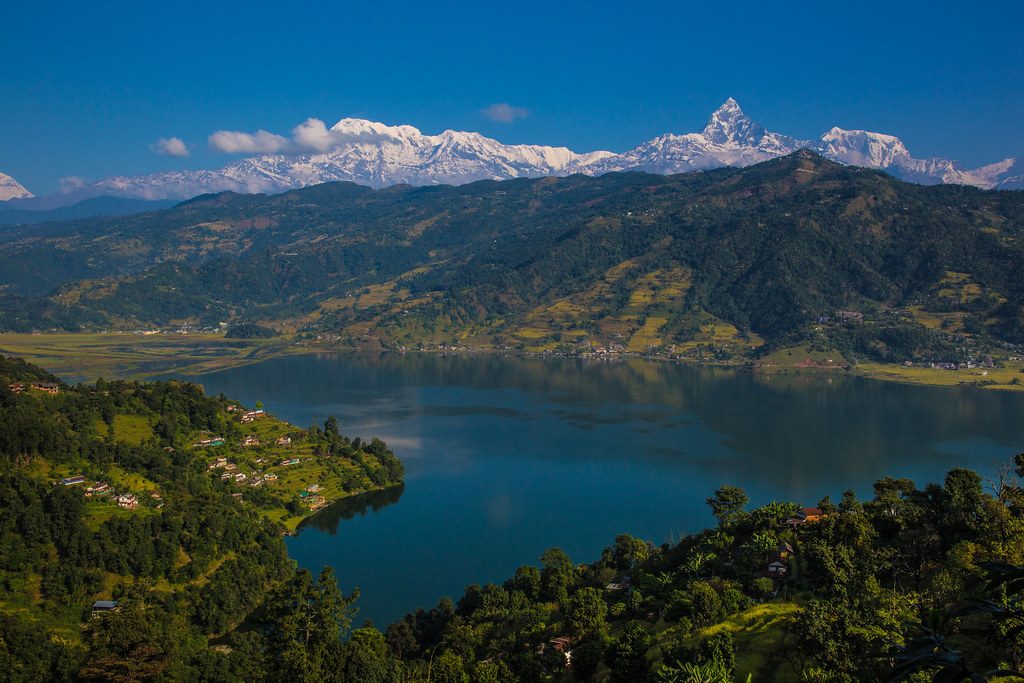
Dhaulagiri · 18 Days
Dhaulagiri Circuit Trek - 18 Days
Duration
18 Days
Max Altitude
5,360m (17,585 ft)
at French Pass
Grade
Strenuous
Lodging
Tented camping + 3-star hotels in cities
Overview
The Dhaulagiri Circuit is one of Nepal's most committing teahouse-less expeditions. Over 18 days you walk a complete loop around Mount Dhaulagiri (8,167m) - the world's seventh-highest peak - crossing the dramatic French Pass (5,360m) and Dhampus Pass (5,230m) into Hidden Valley before descending into the Kali Gandaki gorge at Jomsom. There are no teahouses above Boghara. We carry a full kitchen crew, dining tent, sleeping tents and mule team for two weeks.
What makes Dhaulagiri Circuit special is its scale - you walk past three different base camps (Italian, Japanese and Dhaulagiri I), spend a night at the foot of one of the world's most striking ice walls, and cross from Magar farming country to the trans-Himalayan rain shadow in a single trek. This is not a beginner's expedition. You need real Himalayan experience, real fitness and real comfort with multi-day camping at altitude.
Highlights
- Cross the French Pass (5,360m) and Dhampus Pass (5,230m) on consecutive days
- Camp at Dhaulagiri Base Camp (4,750m) at the foot of the world's 7th highest mountain
- Three base camps in three days: Italian (3,585m), Japanese (3,810m), Dhaulagiri (4,750m)
- Walk through Hidden Valley - a vast high-altitude basin invisible from below
- Descend into the apple-growing village of Marpha in the Kali Gandaki
- Cross from Magar farming country to Trans-Himalayan rain shadow in 14 days
- Views of Dhaulagiri I, Tukuche Peak, Dhampus Peak, Nilgiri and Annapurna I
- Fully supported camping expedition with full crew
- Visit Marpha's apple orchards and Bon culture on the descent
- Kathmandu-based, small-group, senior local guide
Itinerary
Day 1
Arrival in Kathmandu (1,400m)
🍽 Welcome dinner
Day 1
Arrival in Kathmandu (1,400m)
🍽 Welcome dinner
Day 2
Half-day Kathmandu sightseeing
🍽 Breakfast
Day 2
Half-day Kathmandu sightseeing
🍽 Breakfast
Day 3
Kathmandu to Pokhara by tourist bus
⏱ 7-8 hours
↔ 200 km
🍽 Breakfast
Day 3
Kathmandu to Pokhara by tourist bus
⏱ 7-8 hours ↔ 200 km 🍽 Breakfast
Day 4
Pokhara to Dharapani (1,560m) via Darbang
⏱ 6-7 hours
↔ Drive
🍽 Breakfast, Lunch, Dinner
Day 4
Pokhara to Dharapani (1,560m) via Darbang
⏱ 6-7 hours ↔ Drive 🍽 Breakfast, Lunch, Dinner
Day 5
Dharapani to Muri (1,840m)
⏱ 5-6 hours
↔ 12 km
🍽 Breakfast, Lunch, Dinner
Day 5
Dharapani to Muri (1,840m)
⏱ 5-6 hours ↔ 12 km 🍽 Breakfast, Lunch, Dinner
Day 6
Muri to Boghara (1,990m)
⏱ 5-6 hours
↔ 13 km
🍽 Breakfast, Lunch, Dinner
Day 6
Muri to Boghara (1,990m)
⏱ 5-6 hours ↔ 13 km 🍽 Breakfast, Lunch, Dinner
Day 7
Boghara to Dobhan (2,400m)
⏱ 5-6 hours
↔ 12 km
🍽 Breakfast, Lunch, Dinner
Day 7
Boghara to Dobhan (2,400m)
⏱ 5-6 hours ↔ 12 km 🍽 Breakfast, Lunch, Dinner
Day 8
Dobhan to Sallaghari (2,820m)
⏱ 5-6 hours
↔ 11 km
🍽 Breakfast, Lunch, Dinner
Day 8
Dobhan to Sallaghari (2,820m)
⏱ 5-6 hours ↔ 11 km 🍽 Breakfast, Lunch, Dinner
Day 9
Sallaghari to Italian Base Camp (3,585m)
⏱ 5-6 hours
↔ 9 km
🍽 Breakfast, Lunch, Dinner
Day 9
Sallaghari to Italian Base Camp (3,585m)
⏱ 5-6 hours ↔ 9 km 🍽 Breakfast, Lunch, Dinner
Day 10
Italian Base Camp to Japanese Base Camp (3,810m)
⏱ 5-6 hours
↔ 8 km
🍽 Breakfast, Lunch, Dinner
Day 10
Italian Base Camp to Japanese Base Camp (3,810m)
⏱ 5-6 hours ↔ 8 km 🍽 Breakfast, Lunch, Dinner
Day 11
Japanese Base Camp to Dhaulagiri Base Camp (4,750m)
⏱ 4-5 hours
↔ 7 km
🍽 Breakfast, Lunch, Dinner
Day 11
Japanese Base Camp to Dhaulagiri Base Camp (4,750m)
⏱ 4-5 hours ↔ 7 km 🍽 Breakfast, Lunch, Dinner
Day 12
Rest day at Dhaulagiri Base Camp
🍽 Breakfast, Lunch, Dinner
Day 12
Rest day at Dhaulagiri Base Camp
🍽 Breakfast, Lunch, Dinner
Day 13
Dhaulagiri Base Camp to Hidden Valley (4,900m) via French Pass (5,360m)
⏱ 6-7 hours
↔ 10 km
▲ 5,360m
🍽 Breakfast, packed Lunch, Dinner
Day 13
Dhaulagiri Base Camp to Hidden Valley (4,900m) via French Pass (5,360m)
⏱ 6-7 hours ↔ 10 km ▲ 5,360m 🍽 Breakfast, packed Lunch, Dinner
Day 14
Hidden Valley to Yak Kharka (3,990m) via Dhampus Pass (5,230m)
⏱ 7-8 hours
↔ 14 km
▲ 5,230m
🍽 Breakfast, packed Lunch, Dinner
Day 14
Hidden Valley to Yak Kharka (3,990m) via Dhampus Pass (5,230m)
⏱ 7-8 hours ↔ 14 km ▲ 5,230m 🍽 Breakfast, packed Lunch, Dinner
Day 15
Yak Kharka to Jomsom (2,720m) via Marpha
⏱ 5-6 hours
↔ 13 km
🍽 Breakfast, Lunch, Dinner
Day 15
Yak Kharka to Jomsom (2,720m) via Marpha
⏱ 5-6 hours ↔ 13 km 🍽 Breakfast, Lunch, Dinner
Day 16
Jomsom to Pokhara by domestic flight
⏱ 20-min flight
🍽 Breakfast
Day 16
Jomsom to Pokhara by domestic flight
⏱ 20-min flight 🍽 Breakfast
Day 17
Pokhara to Kathmandu
⏱ 7-8 hour drive or 30-min flight
🍽 Breakfast
Day 17
Pokhara to Kathmandu
⏱ 7-8 hour drive or 30-min flight 🍽 Breakfast
Day 18
Departure
🍽 Breakfast
Day 18
Departure
🍽 Breakfast
Ready to walk this?
Enquire now →What's included
Included
- All ground transfers (tourist bus Kathmandu-Pokhara, private jeep to/from trailheads)
- Jomsom-Pokhara domestic flight
- 3 nights' Kathmandu and 2 nights' Pokhara accommodation (3-star, BB plan)
- Half-day Kathmandu sightseeing with guide
- Annapurna Conservation Area Permit
- Dhaulagiri Restricted Area Permit
- Senior government-licensed English-speaking guide
- Full kitchen crew (cook + kitchen helpers)
- Mule team for baggage
- All camping equipment (tents, dining tent, toilet tent, kitchen tent)
- Three meals a day throughout the trek
- Group first-aid kit
- HHT company duffel bag
- All applicable government taxes
Not included
- Nepal visa fee
- International airfare
- Travel insurance covering trekking to 5,500m with helicopter rescue (compulsory)
- Meals in Kathmandu and Pokhara outside BB plan
- Personal trekking equipment
- Hot showers, charging, sat-phone calls
- Alcohol and bottled drinks
- Tips for the camping crew
- Any cost arising from flight delays or weather
Trek guide
The Seventh 8,000m and Its Circuit
Mount Dhaulagiri (8,167m) was the highest known mountain in the world for 30 years before Kanchenjunga was measured higher in 1808. It is one of the most isolated 8,000m peaks - the closest comparable peak (Annapurna I, 8,091m) is 34 km away across the Kali Gandaki gorge. The circuit trek runs anti-clockwise around the entire massif.
Why Anti-Clockwise
We run the trek anti-clockwise (Beni-Boghara-Italian Camp-Dhaulagiri BC-French Pass-Hidden Valley-Jomsom). This builds altitude gradually over 10 days before the pass crossing. The reverse direction would start with the pass cold and is rarely done by commercial operators.
The Three Base Camps
- Italian Base Camp (3,585m): Used by Italian expedition teams. First glimpse of Dhaulagiri's north-east face.
- Japanese Base Camp (3,810m): Used by Japanese teams attempting the south-east ridge.
- Dhaulagiri Base Camp (4,750m): The main climbing base camp. Direct view of the mountain's south face and Tukuche Peak.
French Pass and Hidden Valley
The French Pass (5,360m) was named by the 1950 French Annapurna expedition (Maurice Herzog) that crossed it during reconnaissance. On the other side lies Hidden Valley - a vast 4,900m basin invisible from below, ringed by Tukuche Peak and Dhampus Peak.
Acclimatisation
Built-in rest day at Dhaulagiri Base Camp (Day 12) before the French Pass on Day 13. Pulse-oximeter every morning above 4,000m. The slow climb profile from Pokhara to Italian Base Camp gives a good acclimatisation arc.
Permits
- Annapurna Conservation Area Permit (ACAP)
- Dhaulagiri Restricted Area Permit (USD 10/week)
Both arranged in Kathmandu before departure.
Best Season
- Late spring (April-May): Warmer at altitude, stable weather
- Autumn (September-October): Clearest visibility, drier passes
Monsoon (Jun-Aug) is dangerous - landslides on the lower section. Winter is impossible - passes snowed in.
Fitness
Strenuous. 18 days of walking, two 5,000m+ passes back to back, full camping conditions. Prior Himalayan trekking experience to 5,000m+ strongly recommended. 6 months of focussed training.
Packing list
Clothing: Heavy down jacket -20C, fleece mid-layer, soft-shell jacket, hard-shell waterproof, soft-shell trousers, 3 trekking shirts, 2 trousers, thermal base layers, 7 pairs socks, beanie, sun hat, balaclava, neck buff, insulated and liner gloves
Footwear: Stiff-soled waterproof trekking boots, gaiters, instep crampons or micro-spikes for the passes, camp shoes
Accessories: 40L daypack, 80L duffel for mule, -20C sleeping bag, trekking poles, headlamp + spare batteries, polarised sunglasses cat 4, 2L water capacity, water purification, power bank (15,000+ mAh)
Documents: Passport, Nepal visa, insurance, 4 passport photos
Medical: Diamox 250mg, painkillers, antihistamines, antibiotics (doctor advice), blister care, SPF 50+ sunscreen, lip balm, rehydration salts, personal medications
Frequently asked questions
How does this compare to Manaslu or Annapurna Circuit?
Do I need crampons?
How fit do I need to be?
How cold does it get?
What if a pass is closed by weather?
Are showers possible?
How are the camping conditions?
Can I do just half the circuit?
Is there mobile signal?
When is the best season?
Still have questions? Talk to a guide →
Why book this with us
Senior local guides. Small groups. Honest pricing.
- Departures led by a guide who grew up in the region.
- Max 8 trekkers per group — no convoys.
- 100% Nepali-owned. Profit stays in the valleys.
- Free cancellation up to 30 days before departure.
- Permits, internal flights and TIMS handled by us.
- 24/7 in-country support during your trek.