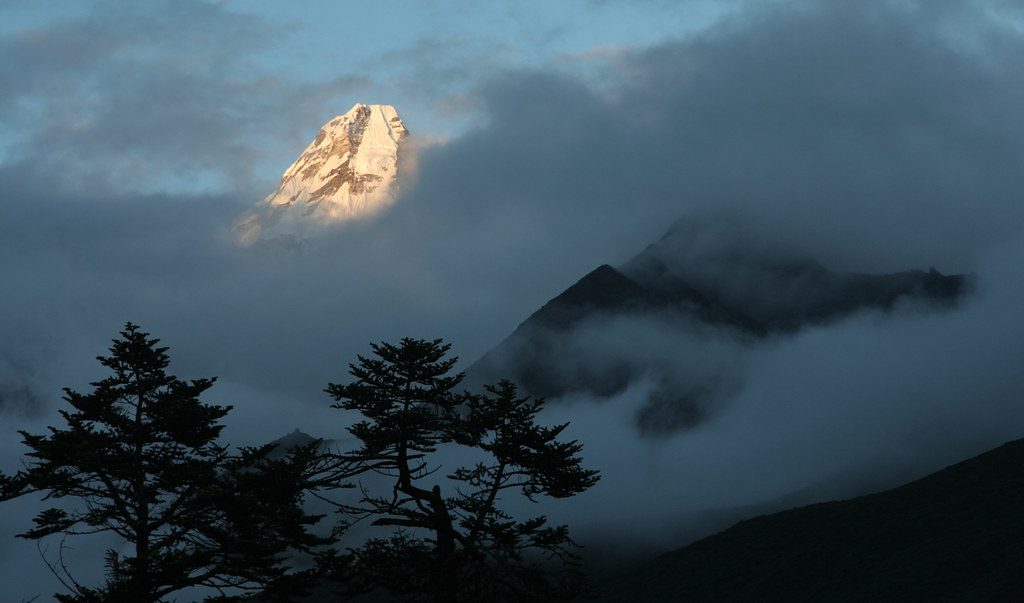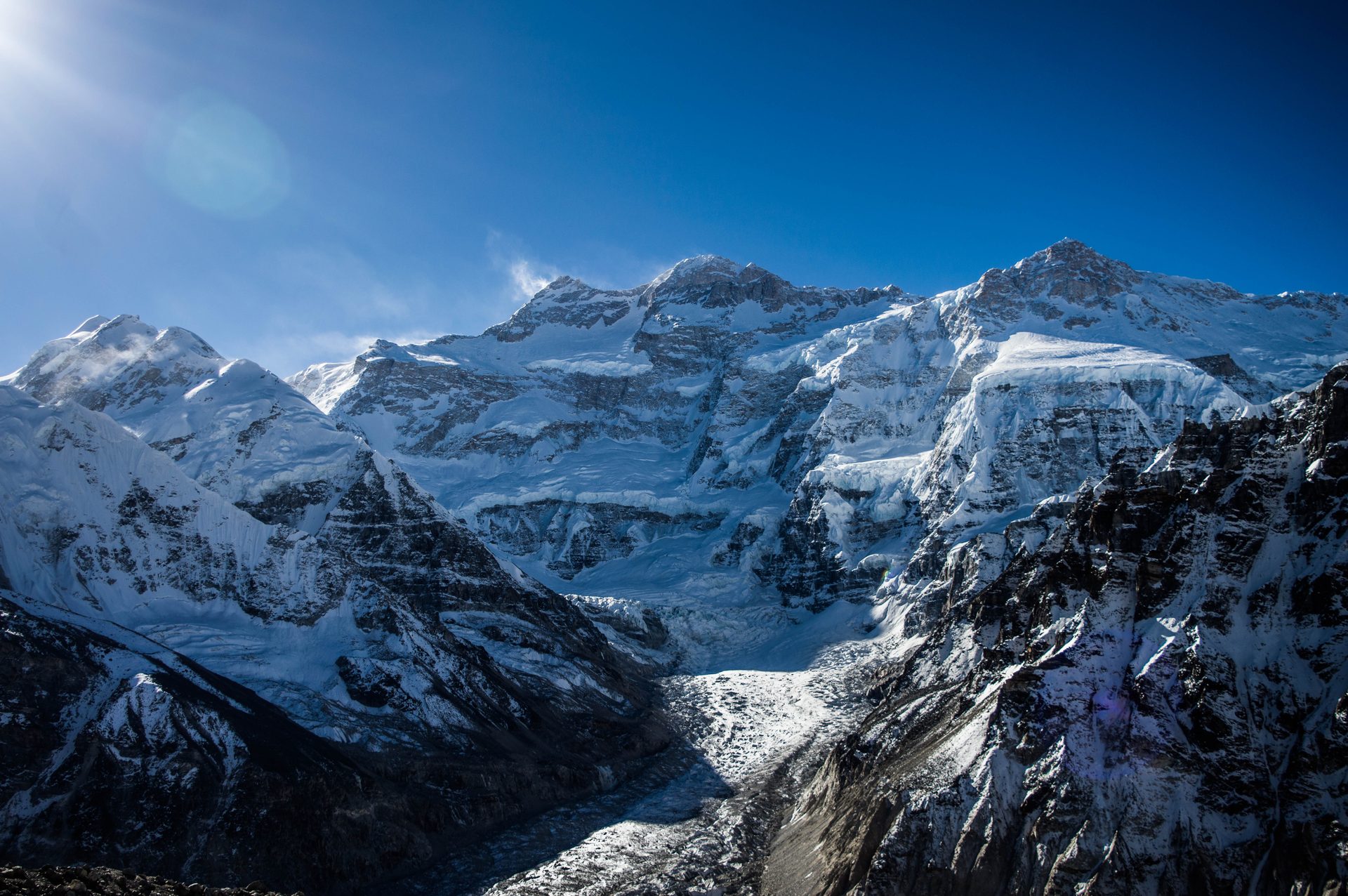
Eastern Nepal · 18 Days
Lumba Sumba Pass Trek - 18 Days
Duration
18 Days
Max Altitude
5,160m (16,929 ft)
at Lumba Sumba Pass
Grade
Strenuous
Lodging
Tented camping (full crew) + Kathmandu hotel
Overview
The Lumba Sumba Pass Trek is one of the great wilderness connectors of eastern Nepal - an 18-day camping expedition that links the Kanchenjunga Conservation Area with the Makalu Barun National Park via the 5,160m Lumba Sumba pass. It is part of the Great Himalayan Trail and one of the least-walked sections of it; full crew, full camping, no teahouses for most of the route.
The trek starts in the upper Tamur valley above Taplejung, climbs through Olangchung Gola and the Walung trading villages, crosses Lumba Sumba into the Arun watershed, then descends past Thudam and Chyamtang to Hatiya and out to Tumlingtar. You walk through two restricted areas, two national-park-grade ecosystems, and three distinct cultural zones (Limbu, Walung-Bhote and Lhomi) in a single trip. Snow leopard and red panda habitat both sides of the pass.
Highlights
- Cross the Lumba Sumba Pass (5,160m) - the watershed between Kanchenjunga and Makalu
- Visit the 400-year-old Diki Chhyoling gompa in Olangchung Gola (3,208m)
- Walk one of the most remote sections of the Great Himalayan Trail
- See both Kanchenjunga (8,586m) and Makalu (8,463m) from the pass viewpoint
- Pass through Lhomi villages (Thudam, Chyamtang) - one of Nepal's smaller ethnic communities
- Traverse two restricted areas (Kanchenjunga and Makalu) in a single trek
- Camp in genuine wilderness for 14 nights - no road access for most of the route
- Wildlife: snow leopard, red panda, Himalayan tahr habitat
- Tea-garden entry via Ilam, Arun valley exit via Tumlingtar
- Full camping crew - guide, cook, porters - and all permits handled
Itinerary
Day 1
Kathmandu, fly to Bhadrapur, drive to Ilam
⏱ Flight + 3 hour drive
🍽 Breakfast, Lunch, Dinner
Day 1
Kathmandu, fly to Bhadrapur, drive to Ilam
⏱ Flight + 3 hour drive 🍽 Breakfast, Lunch, Dinner
Day 2
Drive Ilam to Taplejung
⏱ Long road day
🍽 Breakfast, Lunch, Dinner
Day 2
Drive Ilam to Taplejung
⏱ Long road day 🍽 Breakfast, Lunch, Dinner
Day 3
Taplejung to Rani Pul, trek to Lelep (1,860m)
⏱ Jeep + 4-5 hour trek
🍽 Breakfast, Lunch, Dinner
Day 3
Taplejung to Rani Pul, trek to Lelep (1,860m)
⏱ Jeep + 4-5 hour trek 🍽 Breakfast, Lunch, Dinner
Day 4
Lelep to Illa Danda (2,051m)
⏱ 7 hours
🍽 Breakfast, Lunch, Dinner
Day 4
Lelep to Illa Danda (2,051m)
⏱ 7 hours 🍽 Breakfast, Lunch, Dinner
Day 5
Illa Danda to Selep Kharka (2,525m)
⏱ 6-7 hours
🍽 Breakfast, Lunch, Dinner
Day 5
Illa Danda to Selep Kharka (2,525m)
⏱ 6-7 hours 🍽 Breakfast, Lunch, Dinner
Day 6
Selep Kharka to Olangchung Gola (3,208m)
⏱ 7 hours
🍽 Breakfast, Lunch, Dinner
Day 6
Selep Kharka to Olangchung Gola (3,208m)
⏱ 7 hours 🍽 Breakfast, Lunch, Dinner
Day 7
Acclimatisation day at Olangchung Gola
🍽 Breakfast, Lunch, Dinner
Day 7
Acclimatisation day at Olangchung Gola
🍽 Breakfast, Lunch, Dinner
Day 8
Olangchung Gola to Upper Langmale (3,893m)
⏱ 7 hours
🍽 Breakfast, Lunch, Dinner
Day 8
Olangchung Gola to Upper Langmale (3,893m)
⏱ 7 hours 🍽 Breakfast, Lunch, Dinner
Day 9
Upper Langmale to Lumba Sumba Pass Camp (4,748m)
⏱ 6 hours
🍽 Breakfast, Lunch, Dinner
Day 9
Upper Langmale to Lumba Sumba Pass Camp (4,748m)
⏱ 6 hours 🍽 Breakfast, Lunch, Dinner
Day 10
Cross Lumba Sumba Pass (5,160m), descend to Chauri Kharka (4,598m)
⏱ 10 hours
▲ 5,160m
🍽 Breakfast, Lunch, Dinner
Day 10
Cross Lumba Sumba Pass (5,160m), descend to Chauri Kharka (4,598m)
⏱ 10 hours ▲ 5,160m 🍽 Breakfast, Lunch, Dinner
Day 11
Chauri Kharka to Thudam (3,500m)
⏱ 7 hours
🍽 Breakfast, Lunch, Dinner
Day 11
Chauri Kharka to Thudam (3,500m)
⏱ 7 hours 🍽 Breakfast, Lunch, Dinner
Day 12
Thudam to Kharka (2,877m)
⏱ 6 hours
🍽 Breakfast, Lunch, Dinner
Day 12
Thudam to Kharka (2,877m)
⏱ 6 hours 🍽 Breakfast, Lunch, Dinner
Day 13
Kharka to Chyamtang (2,229m)
⏱ 6 hours
🍽 Breakfast, Lunch, Dinner
Day 13
Kharka to Chyamtang (2,229m)
⏱ 6 hours 🍽 Breakfast, Lunch, Dinner
Day 14
Chyamtang to Hatiya (1,595m)
⏱ 6 hours
🍽 Breakfast, Lunch, Dinner
Day 14
Chyamtang to Hatiya (1,595m)
⏱ 6 hours 🍽 Breakfast, Lunch, Dinner
Day 15
Hatiya to Gola (1,128m)
⏱ 6 hours
🍽 Breakfast, Lunch, Dinner
Day 15
Hatiya to Gola (1,128m)
⏱ 6 hours 🍽 Breakfast, Lunch, Dinner
Day 16
Gola to Hedangna Gadi (1,179m)
⏱ 7 hours
🍽 Breakfast, Lunch, Dinner
Day 16
Gola to Hedangna Gadi (1,179m)
⏱ 7 hours 🍽 Breakfast, Lunch, Dinner
Day 17
Hedangna Gadi to Num, drive to Tumlingtar (1,020m)
⏱ 6 hours trek + drive
🍽 Breakfast, Lunch, Dinner
Day 17
Hedangna Gadi to Num, drive to Tumlingtar (1,020m)
⏱ 6 hours trek + drive 🍽 Breakfast, Lunch, Dinner
Day 18
Fly Tumlingtar to Kathmandu, departure
⏱ 50-min flight
🍽 Breakfast
Day 18
Fly Tumlingtar to Kathmandu, departure
⏱ 50-min flight 🍽 Breakfast
Ready to walk this?
Enquire now →What's included
Included
- Kathmandu-Bhadrapur and Tumlingtar-Kathmandu flights
- Private jeep transfers Bhadrapur-Ilam-Taplejung and Tumlingtar
- 2 nights' Kathmandu accommodation (3-star, BB plan)
- Full camping setup - sleeping tents, kitchen, dining, toilet, shower tents
- All meals, snacks and hot drinks during the trek
- Government-licensed English-speaking guide
- Cook and assistant cooks
- Sufficient porters for camp gear and personal duffels
- Crew insurance and meals
- Kanchenjunga Restricted Area Permit
- Kanchenjunga Conservation Area Project (KCAP) permit
- Makalu Restricted Area Permit
- Makalu Barun National Park entry permit
- HHT company sleeping bag and duffel
- Group first-aid kit and oximeter
- All applicable government taxes
Not included
- Nepal entry visa
- International flights
- Mandatory travel insurance covering trekking to 5,500m with helicopter rescue
- Lunches and dinners in Kathmandu
- Personal trekking equipment
- Bottled drinks and alcohol
- Phone and internet
- Tips for crew and drivers
- Costs from weather or flight delays
Trek guide
The Great Himalayan Trail
The GHT is a notional 1,700-km traverse of the Nepali Himalaya from east to west. The Lumba Sumba section is the connector between the Kanchenjunga eastern terminus and the Makalu Barun region. Very few trekkers walk the GHT end-to-end, but the Lumba Sumba section in isolation is a self-contained 18-day expedition.
Lumba Sumba Pass
The pass sits on the watershed between the Tamur (east) and Arun (west) river systems. At 5,160m it is just below the snowline threshold for autumn but routinely snowed in by late November. The pass day is one of the longest of the trek - typically 10 hours from camp to camp.
Two Restricted Areas
The route crosses both the Kanchenjunga and Makalu restricted-area zones. Both require permits, mandatory licensed guide and a minimum group of 2. We process all four permits (two area permits, two conservation/national park) in Kathmandu before you arrive.
Lhomi Villages
The Lhomi are a small Tibetan-related ethnic group inhabiting the upper Arun valley villages of Thudam, Chyamtang and Hatiya. Their language and Buddhist tradition closely mirror those of the Walung on the Kanchenjunga side - the same trade-route culture, split by the pass.
Climate Zones
- Days 1-3: Sub-tropical Terai and lower hill. Tea gardens, cardamom.
- Days 4-7: Temperate hill forest. Oak, rhododendron.
- Days 8-11: Alpine and glacial. Pass camp at 4,748m.
- Days 12-17: Reverse sequence through Arun valley back to sub-tropical Tumlingtar.
Acclimatisation
Built-in rest day at Olangchung Gola (3,208m) and a steady climb through Upper Langmale (3,893m) and pass camp (4,748m). The pass day is the highest point and the longest. The descent into the Arun is rapid, so altitude is not a problem after Day 11.
Best Season
- Spring (April-May): Pre-monsoon, warmer
- Autumn (late September-mid November): Coldest but driest and clearest
We do not run this trek in monsoon (June-September) or deep winter. The pass window is short.
Fitness
Strenuous. The trek is graded Level 4 - the highest non-mountaineering category. Full camping for 14 nights, a 10-hour pass day, real altitude. Prior multi-week Himalayan trekking and 4,500m+ experience strongly required. 5 months of dedicated training before departure.
Packing list
Clothing: Down jacket -15C, fleece mid-layer, waterproof shell, soft-shell trousers, 3 trekking shirts, 2 trousers, base layers, 6 pairs hiking socks, beanie, sun hat, buff, insulated and liner gloves
Footwear: Waterproof high-ankle trekking boots, gaiters, camp shoes, possibly micro-spikes for pass day
Accessories: 40L daypack, 65L porter duffel, -20C sleeping bag, trekking poles, headlamp + spare batteries, polarised sunglasses, 2L water capacity, water purification, power bank, adapter
Documents: Passport with Nepal visa, insurance certificate, 4 passport photos
Medical: Diamox 250mg, painkillers, antihistamines, antibiotics (per doctor), blister care, SPF 50+ sunscreen, lip balm, rehydration salts
Frequently asked questions
How hard is this trek?
Why two flights?
Is solo trekking allowed?
How many permits?
Is camping comfortable?
How cold does it get?
Mobile signal or Wi-Fi?
Can the pass be closed?
How does this compare to Sherpani Col?
Best season?
Still have questions? Talk to a guide →
Why book this with us
Senior local guides. Small groups. Honest pricing.
- Departures led by a guide who grew up in the region.
- Max 8 trekkers per group — no convoys.
- 100% Nepali-owned. Profit stays in the valleys.
- Free cancellation up to 30 days before departure.
- Permits, internal flights and TIMS handled by us.
- 24/7 in-country support during your trek.