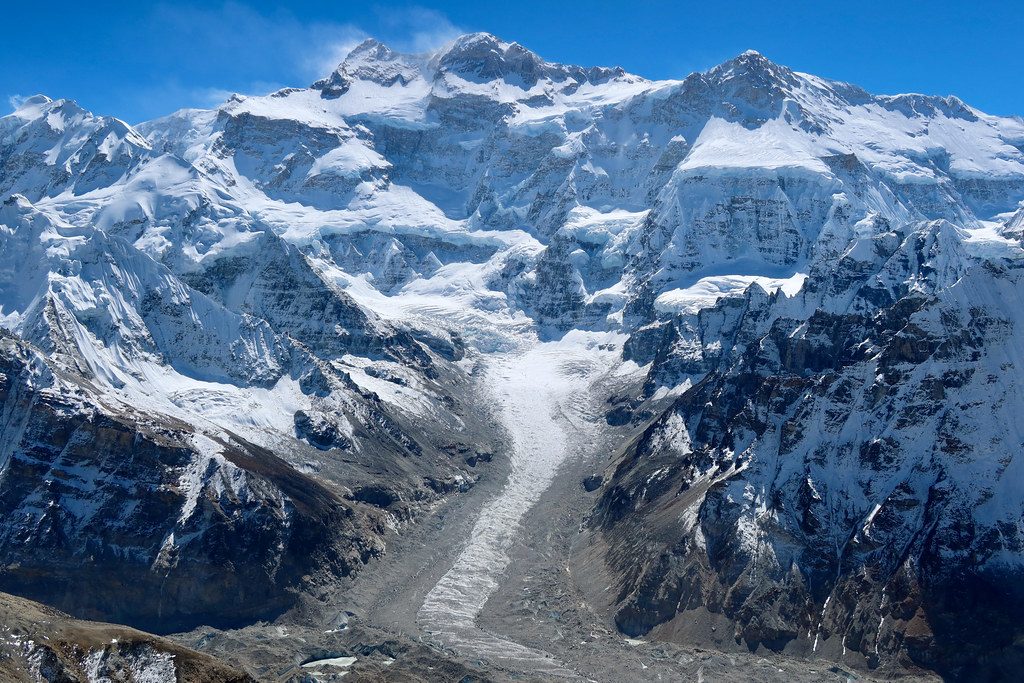
Kanchenjunga · 19 Days
Kanchenjunga Circuit Trek - 19 Days
Duration
19 Days
Max Altitude
5,143m (16,873 ft)
at Pang Pema (North Base Camp)
Grade
Strenuous
Lodging
Teahouse / Lodge
Overview
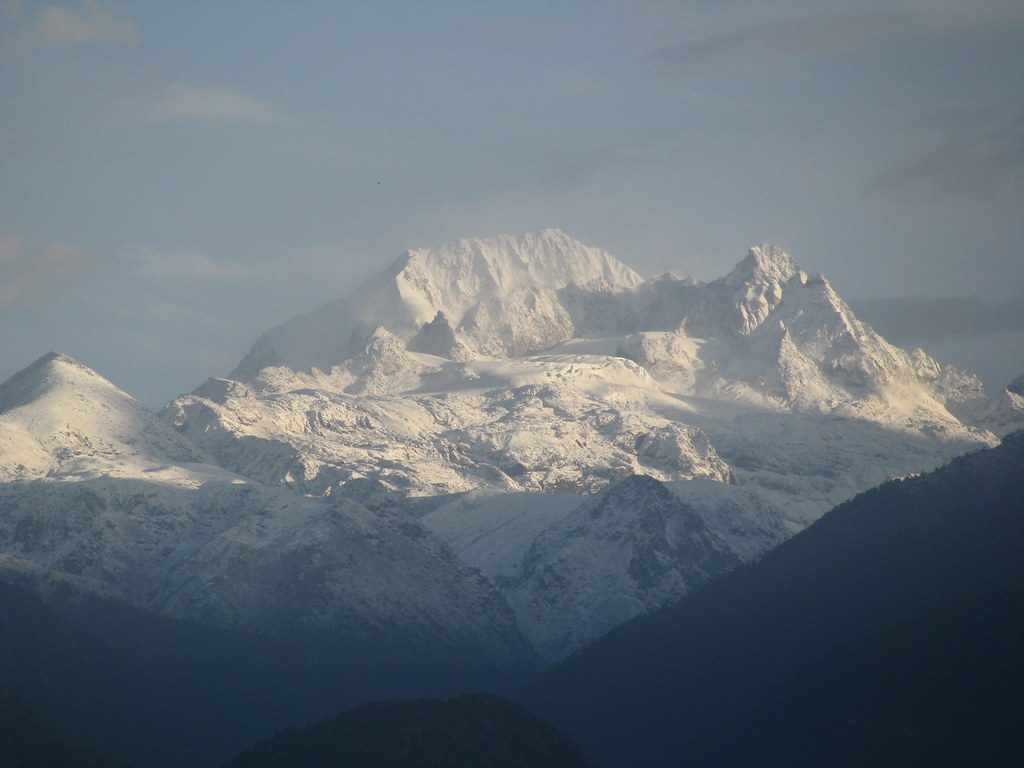
The Kanchenjunga Circuit is Nepal's deepest, remotest, most demanding teahouse trek. It connects both base camps of the world's third-highest mountain - Pang Pema (North, 5,143m) and Ramche (South, 4,580m) - in a 19-day loop through the country's least-visited corner, hard against the Indian Sikkim border. Mount Kanchenjunga (8,586m) is sacred to the local Limbu, Sherpa and Rai people; the entire massif is a restricted protected area requiring a special permit and a minimum-of-two trekker rule.
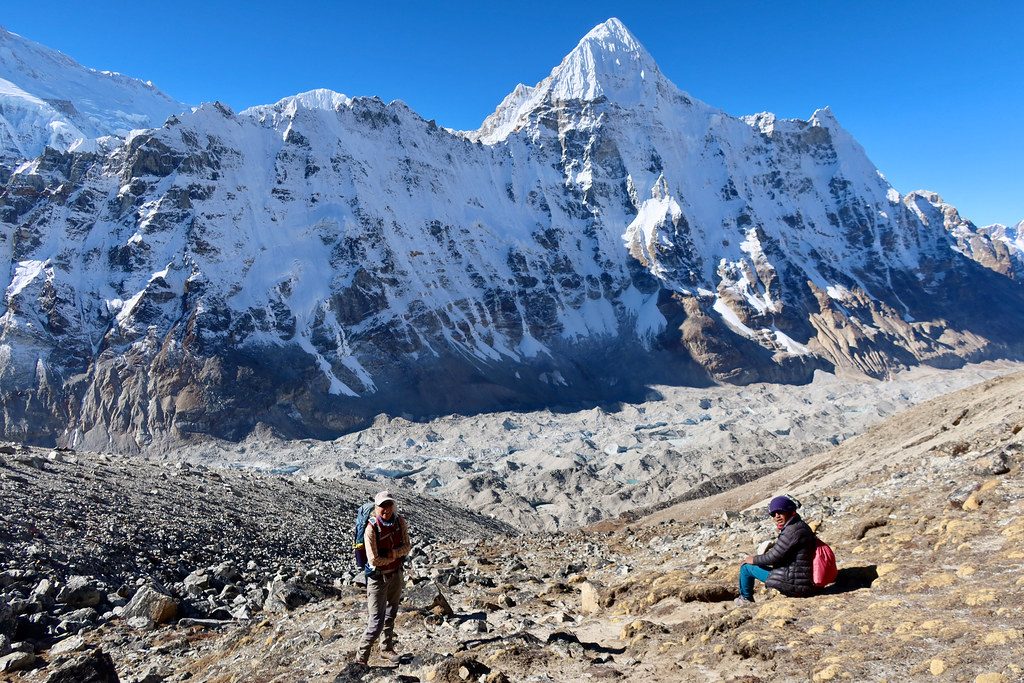
You fly from Kathmandu to Bhadrapur in the tea-growing plains, then drive deep into the Taplejung hills to Sekhatum. From there the trek climbs through bamboo and rhododendron forest to the Tibetan refugee settlement of Ghunsa, on to Lhonak (4,800m) and the north base camp at Pang Pema. The return loop crosses the Sele Le ridge to the southern Yalung glacier and Ramche south base camp before descending to road head at Yamphudin.
Highlights
- Walk to both Kanchenjunga north (Pang Pema, 5,143m) and south (Ramche, 4,580m) base camps
- See Nepal's third 8,000m peak Kanchenjunga (8,586m) from two completely different angles
- Cross the Sele Le ridge (4,290m) with Jannu Himal and Makalu views
- Pass through the Tibetan refugee village of Phale (shopping for Tibetan crafts)
- Walk through the cardamom-growing Limbu and Rai villages of lower Taplejung
- Visit ancient monasteries in Ghunsa and Lhonak
- Wildlife potential: snow leopard, red panda, Himalayan tahr, musk deer (rarely seen)
- Cross from temperate rainforest to high alpine tundra in one trek
- Two acclimatisation days and a flexible weather buffer
- All special permits, flights, jeeps and porters arranged in advance
Itinerary
Day 1
Arrival in Kathmandu (1,400m)
🍽 Welcome dinner
Day 1
Arrival in Kathmandu (1,400m)
🍽 Welcome dinner
Day 2
Fly Kathmandu to Bhadrapur, drive to Phidim (1,595m)
⏱ Flight + 3 hours drive
↔ 45-min flight + 90 km drive
🍽 Breakfast, Lunch, Dinner
Day 2
Fly Kathmandu to Bhadrapur, drive to Phidim (1,595m)
⏱ Flight + 3 hours drive ↔ 45-min flight + 90 km drive 🍽 Breakfast, Lunch, Dinner
Day 3
Phidim to Sekhatum (1,509m)
⏱ 7-8 hours by 4x4
↔ 180 km
🍽 Breakfast, Lunch, Dinner
Day 3
Phidim to Sekhatum (1,509m)
⏱ 7-8 hours by 4x4 ↔ 180 km 🍽 Breakfast, Lunch, Dinner
Day 4
Sekhatum to Amjilosa (2,498m)
⏱ 5 hours
↔ 12 km
🍽 Breakfast, Lunch, Dinner
Day 4
Sekhatum to Amjilosa (2,498m)
⏱ 5 hours ↔ 12 km 🍽 Breakfast, Lunch, Dinner
Day 5
Amjilosa to Gyabla (2,730m)
⏱ 4-5 hours
↔ 9 km
🍽 Breakfast, Lunch, Dinner
Day 5
Amjilosa to Gyabla (2,730m)
⏱ 4-5 hours ↔ 9 km 🍽 Breakfast, Lunch, Dinner
Day 6
Gyabla to Ghunsa (3,595m)
⏱ 6-7 hours
↔ 11 km
🍽 Breakfast, Lunch, Dinner
Day 6
Gyabla to Ghunsa (3,595m)
⏱ 6-7 hours ↔ 11 km 🍽 Breakfast, Lunch, Dinner
Day 7
Acclimatisation at Ghunsa
⏱ 3-4 hours
🍽 Breakfast, Lunch, Dinner
Day 7
Acclimatisation at Ghunsa
⏱ 3-4 hours 🍽 Breakfast, Lunch, Dinner
Day 8
Ghunsa to Kambachen (4,145m)
⏱ 5-6 hours
↔ 11 km
🍽 Breakfast, Lunch, Dinner
Day 8
Ghunsa to Kambachen (4,145m)
⏱ 5-6 hours ↔ 11 km 🍽 Breakfast, Lunch, Dinner
Day 9
Kambachen to Lhonak (4,800m)
⏱ 5-6 hours
↔ 9 km
🍽 Breakfast, Lunch, Dinner
Day 9
Kambachen to Lhonak (4,800m)
⏱ 5-6 hours ↔ 9 km 🍽 Breakfast, Lunch, Dinner
Day 10
Lhonak to Pang Pema North Base Camp (5,143m), return to Kambachen
⏱ 8-9 hours round trip
▲ 5,143m
🍽 Breakfast, packed Lunch, Dinner
Day 10
Lhonak to Pang Pema North Base Camp (5,143m), return to Kambachen
⏱ 8-9 hours round trip ▲ 5,143m 🍽 Breakfast, packed Lunch, Dinner
Day 11
Kambachen to Ghunsa (3,595m)
⏱ 4-5 hours
↔ 11 km
🍽 Breakfast, Lunch, Dinner
Day 11
Kambachen to Ghunsa (3,595m)
⏱ 4-5 hours ↔ 11 km 🍽 Breakfast, Lunch, Dinner
Day 12
Ghunsa to Sele Le (4,290m)
⏱ 5-6 hours
↔ 9 km
🍽 Breakfast, Lunch, Dinner
Day 12
Ghunsa to Sele Le (4,290m)
⏱ 5-6 hours ↔ 9 km 🍽 Breakfast, Lunch, Dinner
Day 13
Sele Le to Cheram (3,868m) via Sinion La (4,646m), Mirgin La (4,663m), Sinelapche Bhanjyang (4,724m)
⏱ 6-7 hours
↔ 13 km
🍽 Breakfast, Lunch, Dinner
Day 13
Sele Le to Cheram (3,868m) via Sinion La (4,646m), Mirgin La (4,663m), Sinelapche Bhanjyang (4,724m)
⏱ 6-7 hours ↔ 13 km 🍽 Breakfast, Lunch, Dinner
Day 14
Cheram to Ramche South Base Camp (4,580m), return to Cheram
⏱ 7-8 hours round trip
▲ 4,580m
🍽 Breakfast, packed Lunch, Dinner
Day 14
Cheram to Ramche South Base Camp (4,580m), return to Cheram
⏱ 7-8 hours round trip ▲ 4,580m 🍽 Breakfast, packed Lunch, Dinner
Day 15
Cheram to Tortong (2,980m)
⏱ 4-5 hours
↔ 11 km
🍽 Breakfast, Lunch, Dinner
Day 15
Cheram to Tortong (2,980m)
⏱ 4-5 hours ↔ 11 km 🍽 Breakfast, Lunch, Dinner
Day 16
Tortong to Yamphudin (1,692m)
⏱ 6-7 hours
↔ 12 km
🍽 Breakfast, Lunch, Dinner
Day 16
Tortong to Yamphudin (1,692m)
⏱ 6-7 hours ↔ 12 km 🍽 Breakfast, Lunch, Dinner
Day 17
Yamphudin to Ilam by jeep
⏱ 7-8 hours
↔ 95 km
🍽 Breakfast, Lunch, Dinner
Day 17
Yamphudin to Ilam by jeep
⏱ 7-8 hours ↔ 95 km 🍽 Breakfast, Lunch, Dinner
Day 18
Ilam to Bhadrapur, fly to Kathmandu
⏱ 3 hours drive + 45 min flight
↔ 95 km + flight
🍽 Breakfast, Dinner
Day 18
Ilam to Bhadrapur, fly to Kathmandu
⏱ 3 hours drive + 45 min flight ↔ 95 km + flight 🍽 Breakfast, Dinner
Day 19
Departure
🍽 Breakfast
Day 19
Departure
🍽 Breakfast
Ready to walk this?
Enquire now →What's included
Included
- Round-trip Kathmandu-Bhadrapur flights
- Private jeep/4x4 transfers from Bhadrapur to Sekhatum and back from Yamphudin
- 2 nights' Kathmandu accommodation (3-star hotel, BB plan)
- Kanchenjunga Conservation Area Permit and Restricted Area Permit
- Senior government-licensed English-speaking guide
- 1 porter for every 2 trekkers (max 20 kg load)
- Twin/double sharing teahouse accommodation on the trek
- Three meals a day throughout the trek
- Group first-aid kit and pulse-oximeter
- Trekking maps
- HHT company duffel bag
- All applicable government taxes
Not included
- Nepal visa fee
- International airfare
- Travel insurance covering trekking to 5,500m with helicopter rescue (compulsory)
- Meals in Kathmandu outside the BB plan
- Hot showers, Wi-Fi, charging in lodges
- Bottled water, soft drinks and alcohol
- Personal trekking equipment
- Tips for guide, porter and driver
- Any cost arising from flight delays, weather or political disruption
Trek guide
The Trek to the World's Third Highest Mountain
Kanchenjunga was, until 1856, believed to be the highest mountain on Earth (it lost the title when accurate measurements placed Everest higher). The name means "Five Treasures of the Great Snow" in Tibetan - referring to the five summits of the main massif. The local Limbu people consider the mountain a god and traditionally summit teams stop a few metres below the true peak as a mark of respect.
The Two Base Camps
- Pang Pema (North Base Camp, 5,143m): A wide moraine flat with a direct view of Kanchenjunga's north face, Tent Peak, Nepal Peak and Gimmigela. Reached on Day 10 of our itinerary as a day trip from Lhonak.
- Ramche (South Base Camp, 4,580m): Closer to the Yalung glacier, with views of Kanchenjunga south, Yalung, Kabru I/II/III and Rathong. Reached on Day 14 as a day trip from Cheram.
Acclimatisation
Two scheduled rest days (Ghunsa at 3,595m and a flexible day at Cheram) plus the natural slow climb give a gentle acclimatisation arc. Our guides carry a pulse-oximeter and use the Lake Louise score to monitor every trekker daily above 4,000m.
Permits
- Kanchenjunga Conservation Area Permit (KCAP)
- Kanchenjunga Restricted Area Permit (compulsory, USD 20/week)
Both permits require a minimum of two trekkers and a licensed guide. We arrange both before departure.
Best Season
- Spring (March-May): Rhododendrons in bloom (April is the peak month), mostly clear views but afternoon clouds common
- Autumn (September-November): Clearer visibility, drier, the photographer's season
We do not run this trek in monsoon. Winter is possible but Ghunsa and above can be snowed in.
Fitness
Strenuous. Long days (some 7-8 hours), basic facilities, plenty of altitude. You should be a fit, experienced trekker with prior multi-day high-altitude experience. 4-6 months of cardio + leg strength preparation recommended.
What the Lodges Are Like
Basic. This is not the Khumbu - lodges in Kambachen, Lhonak and Sele Le have simple plywood rooms with foam mattresses. Diet is repetitive (dal bhat, noodles, eggs, fried rice). Hot showers rare above Ghunsa. Bring a quality sleeping bag.
Packing list
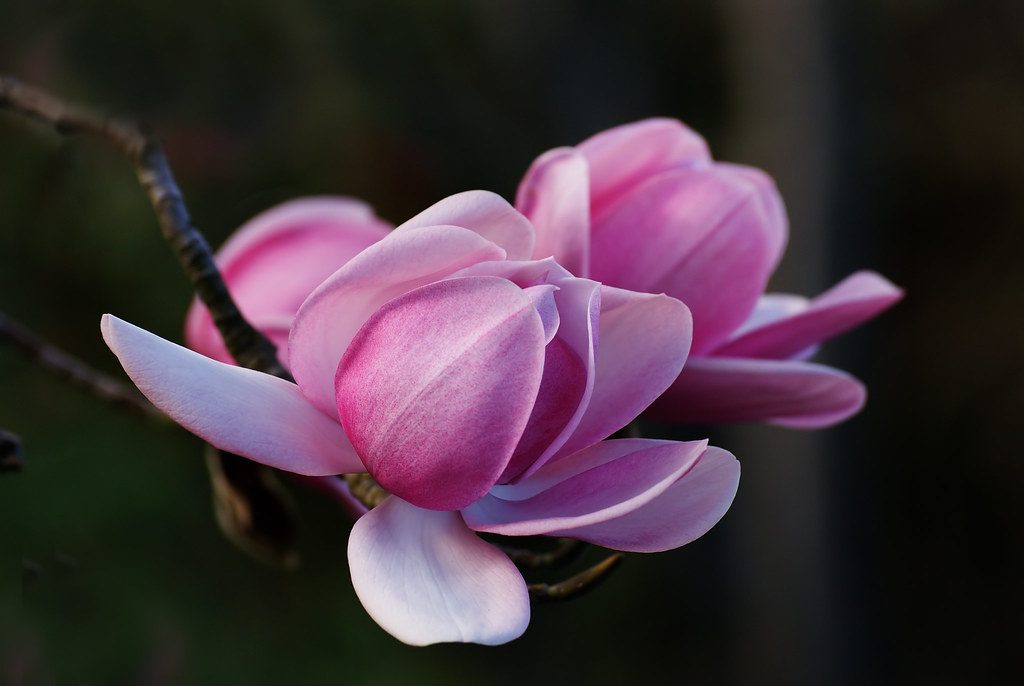
Clothing: Down jacket -10C, mid-weight fleece, waterproof shell, soft-shell trousers, 3 trekking shirts, 2 trousers, thermal base layers, 6 pairs socks, beanie, sun hat, neck buff, insulated and liner gloves
Footwear: Waterproof trekking boots (well broken in), gaiters, camp shoes
Accessories: 40L daypack, 65L duffel for porter, -15C sleeping bag, trekking poles, headlamp + spare batteries, polarised sunglasses, 2L water capacity, water purification, power bank, adapter, multi-day cash supply (no ATMs after Bhadrapur)
Documents: Passport with Nepal visa, insurance certificate, 4 passport photos, copies of permits
Medical: Diamox 250mg, painkillers, antihistamines, antibiotics (consult doctor), blister care, SPF 50+ sunscreen, lip balm, rehydration salts, personal medications
Frequently asked questions
How fit do I need to be?
Why is the minimum group size two?
How crowded is this trek?
How are the lodges?
How cold does it get?
Can I do just one base camp?
How do permits work?
How reliable are the flights?
Is there mobile signal?
Wildlife sightings?
Can I add Lumba Sumba Pass or Olangchung Gola?
Still have questions? Talk to a guide →
Why book this with us
Senior local guides. Small groups. Honest pricing.
- Departures led by a guide who grew up in the region.
- Max 8 trekkers per group — no convoys.
- 100% Nepali-owned. Profit stays in the valleys.
- Free cancellation up to 30 days before departure.
- Permits, internal flights and TIMS handled by us.
- 24/7 in-country support during your trek.