Kanchenjunga · 16 Days
Kanchenjunga North Base Camp Trek - 16 Days
Duration
16 Days
Max Altitude
5,143m (16,873 ft)
at Pang Pema (North Base Camp)
Grade
Strenuous
Lodging
Teahouse / Lodge
Overview
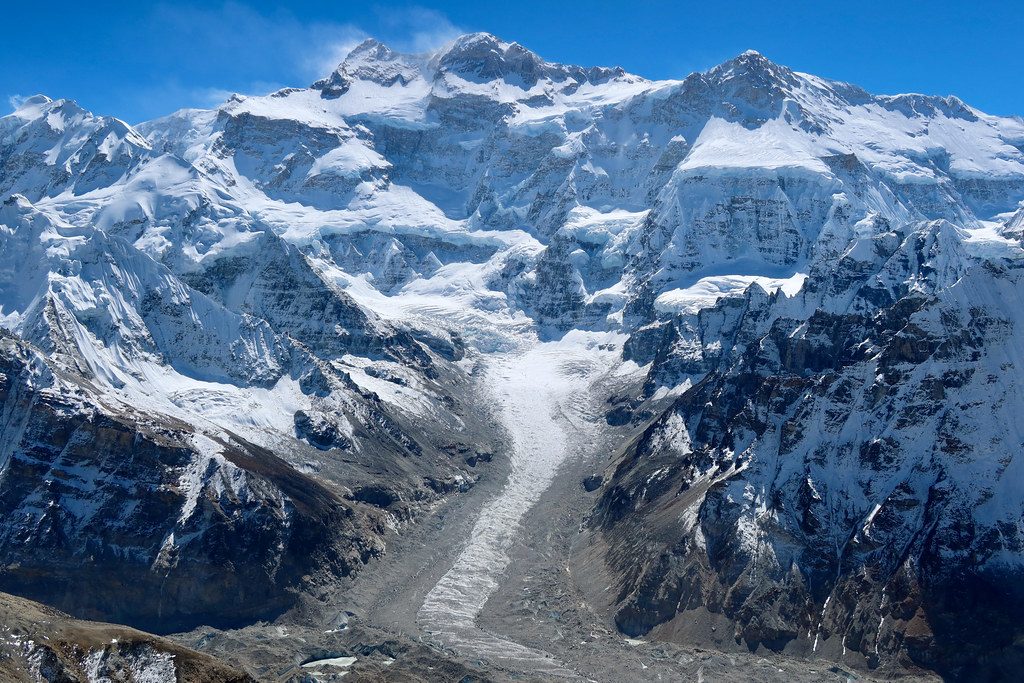
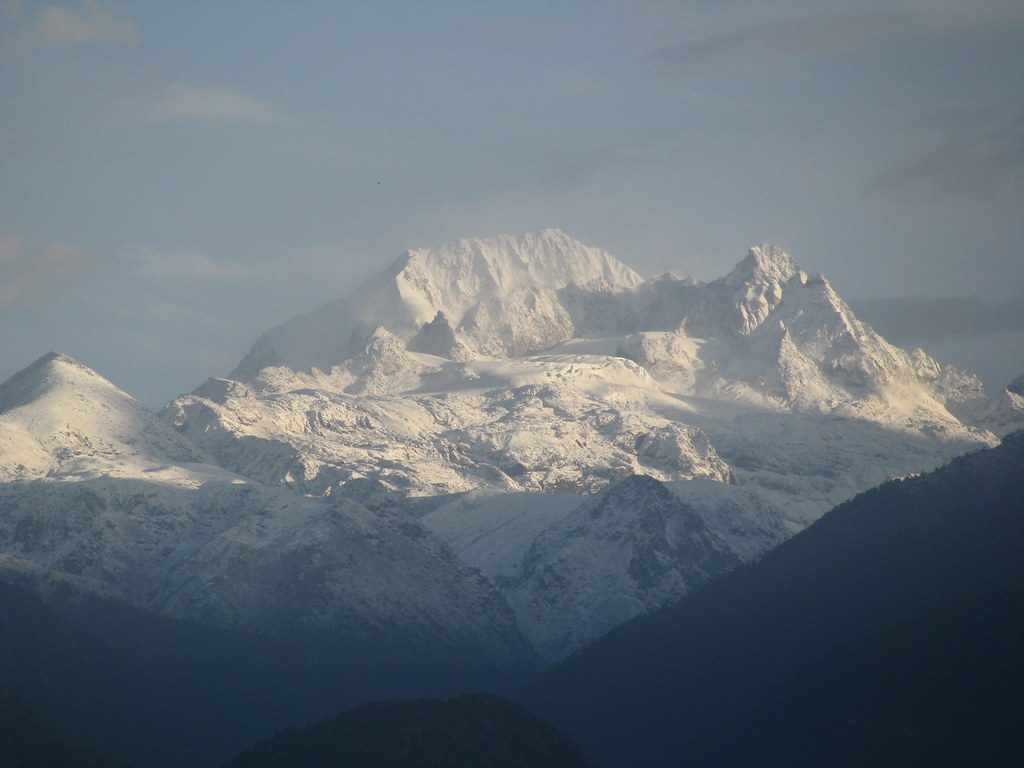
Kanchenjunga (8,586m) is the world's third-highest mountain and one of the most remote 8,000m peaks reachable on foot in Nepal. The north base camp - Pang Pema at 5,143m - sits on the lateral moraine of the Kanchenjunga Glacier directly beneath the mountain's vast north face. Reaching it takes 16 days of progressive walking from the tea-garden lowlands of Bhadrapur through the restricted-area villages of the upper Tamur and Ghunsa valleys.
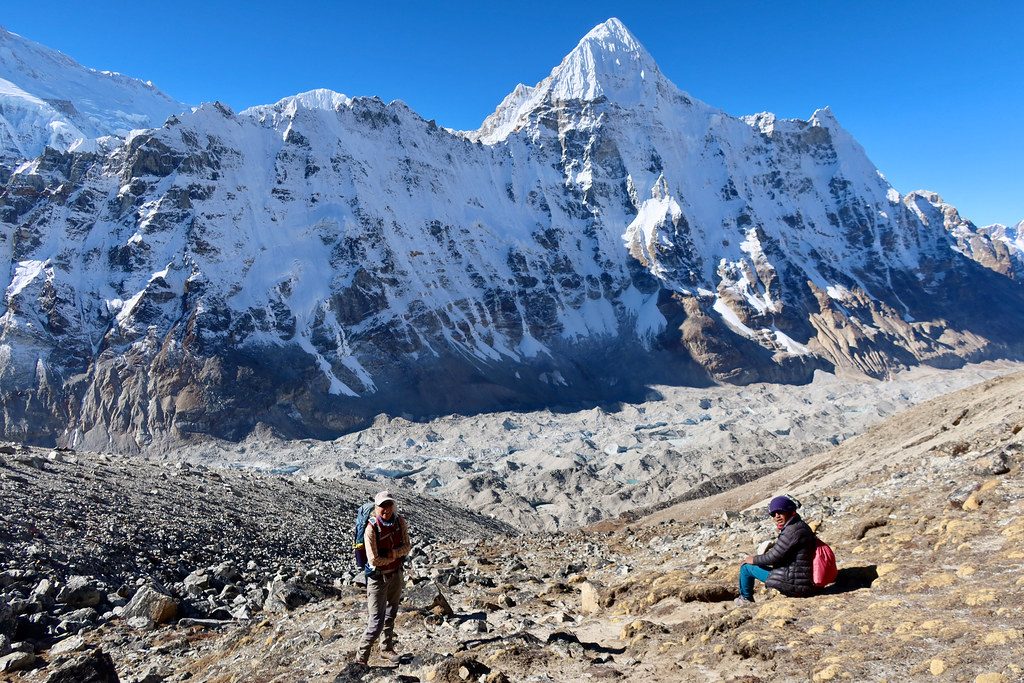
This is one of Nepal's least-walked classic treks. The region only opened to outsiders in 1988 and still sees fewer than 1,500 trekkers per year - a fraction of Everest or Annapurna numbers. Lodges are simple, the trail is long, and weather windows are short, but the reward is one of the most complete Himalayan amphitheatres in the country: Kanchenjunga, Tent Peak, Nepal Peak and the Twin Peaks all visible from a single moraine ridge above Pang Pema.
Highlights
- Stand at Pang Pema (5,143m) - the classic north-face viewpoint of Kanchenjunga
- Walk through the Kanchenjunga Conservation Area - red panda and snow leopard habitat
- Sleep in the Sherpa village of Ghunsa (3,595m) with its working hydropower scheme and gompa
- Cross the cardamom-farming Limbu lowlands of the lower Tamur
- Visit Tibetan refugee settlements at Phale and the riverside Sherpa hamlets of Amjilosa and Gyabla
- Pass through bamboo, fir, rhododendron and conifer forest zones in succession
- Acclimatisation day built in at Ghunsa
- Glacier-edge walking on the Kanchenjunga moraine between Lhonak and Pang Pema
- Drive out through Ilam's tea gardens for a non-repeat exit route
- Restricted-area permit and conservation fees pre-arranged
Itinerary
Day 1
Arrive in Kathmandu (1,400m)
🍽 Welcome dinner
Day 1
Arrive in Kathmandu (1,400m)
🍽 Welcome dinner
Day 2
Fly Kathmandu to Bhadrapur, drive to Taplejung
↔ 45-min flight + 7-8 hour drive
🍽 Breakfast, Lunch, Dinner
Day 2
Fly Kathmandu to Bhadrapur, drive to Taplejung
↔ 45-min flight + 7-8 hour drive 🍽 Breakfast, Lunch, Dinner
Day 3
Jeep to Rani Pool, trek to Sekhathum (1,509m)
↔ 2-3 hour trek after drive
🍽 Breakfast, Lunch, Dinner
Day 3
Jeep to Rani Pool, trek to Sekhathum (1,509m)
↔ 2-3 hour trek after drive 🍽 Breakfast, Lunch, Dinner
Day 4
Sekhathum to Amjilosa (2,498m)
⏱ 4-5 hours
↔ 7 km
🍽 Breakfast, Lunch, Dinner
Day 4
Sekhathum to Amjilosa (2,498m)
⏱ 4-5 hours ↔ 7 km 🍽 Breakfast, Lunch, Dinner
Day 5
Amjilosa to Gyabla (2,730m)
⏱ 4-5 hours
↔ 8 km
🍽 Breakfast, Lunch, Dinner
Day 5
Amjilosa to Gyabla (2,730m)
⏱ 4-5 hours ↔ 8 km 🍽 Breakfast, Lunch, Dinner
Day 6
Gyabla to Ghunsa (3,595m)
⏱ 6-7 hours
↔ 11 km
🍽 Breakfast, Lunch, Dinner
Day 6
Gyabla to Ghunsa (3,595m)
⏱ 6-7 hours ↔ 11 km 🍽 Breakfast, Lunch, Dinner
Day 7
Acclimatisation day at Ghunsa (3,595m)
🍽 Breakfast, Lunch, Dinner
Day 7
Acclimatisation day at Ghunsa (3,595m)
🍽 Breakfast, Lunch, Dinner
Day 8
Ghunsa to Kambachen (4,145m)
⏱ 5-6 hours
↔ 10 km
🍽 Breakfast, Lunch, Dinner
Day 8
Ghunsa to Kambachen (4,145m)
⏱ 5-6 hours ↔ 10 km 🍽 Breakfast, Lunch, Dinner
Day 9
Kambachen to Lhonak (4,500m)
⏱ 5-6 hours
↔ 9 km
🍽 Breakfast, Lunch, Dinner
Day 9
Kambachen to Lhonak (4,500m)
⏱ 5-6 hours ↔ 9 km 🍽 Breakfast, Lunch, Dinner
Day 10
Lhonak to Pang Pema (5,143m) and return to Kambachen
⏱ 7-8 hours total
↔ 10 km out-and-back
▲ 5,143m
🍽 Breakfast, Lunch, Dinner
Day 10
Lhonak to Pang Pema (5,143m) and return to Kambachen
⏱ 7-8 hours total ↔ 10 km out-and-back ▲ 5,143m 🍽 Breakfast, Lunch, Dinner
Day 11
Kambachen to Ghunsa (3,595m)
⏱ 4-5 hours
↔ 10 km
🍽 Breakfast, Lunch, Dinner
Day 11
Kambachen to Ghunsa (3,595m)
⏱ 4-5 hours ↔ 10 km 🍽 Breakfast, Lunch, Dinner
Day 12
Ghunsa to Amjilosa (2,730m)
⏱ 7-8 hours
↔ 19 km
🍽 Breakfast, Lunch, Dinner
Day 12
Ghunsa to Amjilosa (2,730m)
⏱ 7-8 hours ↔ 19 km 🍽 Breakfast, Lunch, Dinner
Day 13
Amjilosa to Rani Pool, drive to Taplejung
⏱ 3 hour trek + jeep
🍽 Breakfast, Lunch, Dinner
Day 13
Amjilosa to Rani Pool, drive to Taplejung
⏱ 3 hour trek + jeep 🍽 Breakfast, Lunch, Dinner
Day 14
Drive Taplejung to Ilam (800m)
⏱ 6-7 hours
🍽 Breakfast, Lunch, Dinner
Day 14
Drive Taplejung to Ilam (800m)
⏱ 6-7 hours 🍽 Breakfast, Lunch, Dinner
Day 15
Drive to Bhadrapur, fly to Kathmandu
⏱ 3-hour drive + 40-min flight
🍽 Breakfast
Day 15
Drive to Bhadrapur, fly to Kathmandu
⏱ 3-hour drive + 40-min flight 🍽 Breakfast
Day 16
Final departure
🍽 Breakfast
Day 16
Final departure
🍽 Breakfast
Ready to walk this?
Enquire now →What's included
Included
- Kathmandu-Bhadrapur return flights
- Private jeep transfers from Bhadrapur to Taplejung and back via Ilam
- 2 nights' Kathmandu accommodation (3-star, BB plan)
- Twin-share teahouse rooms throughout the trek
- All three meals daily during the trek
- Government-licensed English-speaking guide
- 1 porter shared between 2 trekkers (20 kg load limit)
- Kanchenjunga Conservation Area Project (KCAP) permit
- Kanchenjunga Restricted Area Permit
- Group first-aid kit and oximeter
- HHT company duffel bag
- All applicable government taxes
Not included
- Nepal entry visa
- International flights to/from Kathmandu
- Compulsory travel insurance covering trekking to 5,500m with helicopter rescue
- Lunches and dinners in Kathmandu
- Hot showers, Wi-Fi and device charging in teahouses
- Bottled drinks and alcohol
- Personal trekking gear
- Tips for crew and drivers
- Costs incurred from weather delays or flight cancellations
Trek guide
The Third Pole
Kanchenjunga was the world's highest known mountain until 1852 when Everest was surveyed. It was first summitted in 1955 by a British team via the southwest face. The Nepalese side of the mountain has two distinct trekking approaches - the north base camp (Pang Pema, this route) and the south base camp (Oktang/Yalung, a separate trek). The full Kanchenjunga Circuit links both via the Sele Le pass.
Kanchenjunga Conservation Area
Established in 1997 and covering 2,035 sq km, the KCA is one of Nepal's largest protected areas. It harbours snow leopard, red panda, musk deer and Himalayan black bear, plus more than 250 bird species. The conservation area is co-managed by local communities - a Nepal-first model.
Restricted Area Status
The Kanchenjunga region requires a special restricted-area permit, mandatory licensed guide, and a minimum trekking group of 2. Solo trekking is not permitted. Permits are processed in Kathmandu before departure.
Climate Zones
- Days 1-3: Sub-tropical. Cardamom, banana, rice terraces in the Tamur valley.
- Days 4-6: Temperate. Oak, bamboo and rhododendron forest.
- Days 7-9: Sub-alpine. Pine, juniper, birch.
- Days 10: Glacial. Moraine and ice at Pang Pema.
Acclimatisation
A full rest day at Ghunsa (3,595m) is the most important acclimatisation stop. The biggest single-day jump - Lhonak to Pang Pema and back to Kambachen - is a same-day climb-high-sleep-low profile designed to ease the altitude transition.
Best Season
- Spring (April-May): Rhododendrons in bloom, slightly warmer nights, occasional afternoon cloud
- Autumn (October-November): Driest, clearest, coldest above 4,500m
Monsoon (June-September) is not recommended - leeches in the lower forest, landslides on the jeep approach, low cloud at the base camp. Winter is technically possible but the upper section frequently snowed in.
Fitness
Strenuous. 5-7 hour days, real altitude, basic lodges and a long trip duration. Prior experience above 4,000m is strongly recommended. 4 months of dedicated cardio and leg-strength conditioning before departure.
Packing list
Clothing: Down jacket -15C, fleece mid-layer, waterproof shell, soft-shell trousers, 3 trekking shirts, 2 trousers, base layers, 6 pairs hiking socks, beanie, sun hat, neck buff, insulated and liner gloves
Footwear: Waterproof high-ankle trekking boots, gaiters, lightweight camp shoes
Accessories: 40L daypack, 65L porter duffel, -15C sleeping bag, trekking poles, headlamp + spare batteries, polarised sunglasses, 2L water capacity, water purification tablets, power bank, universal adapter
Documents: Passport with Nepal visa, insurance certificate, 4 passport photos
Medical: Diamox 250mg, painkillers, antihistamines, antibiotics (per doctor), blister care, SPF 50+ sunscreen, lip balm, oral rehydration salts
Frequently asked questions
How does this compare to Everest Base Camp?
How fit do I need to be?
Is solo trekking allowed?
How are the lodges?
Are the Bhadrapur flights reliable?
Can I see Everest from Pang Pema?
How cold does it get?
Is Wi-Fi available?
Can I combine this with the south base camp?
Are the permits hard to get?
Still have questions? Talk to a guide →
Why book this with us
Senior local guides. Small groups. Honest pricing.
- Departures led by a guide who grew up in the region.
- Max 8 trekkers per group — no convoys.
- 100% Nepali-owned. Profit stays in the valleys.
- Free cancellation up to 30 days before departure.
- Permits, internal flights and TIMS handled by us.
- 24/7 in-country support during your trek.